
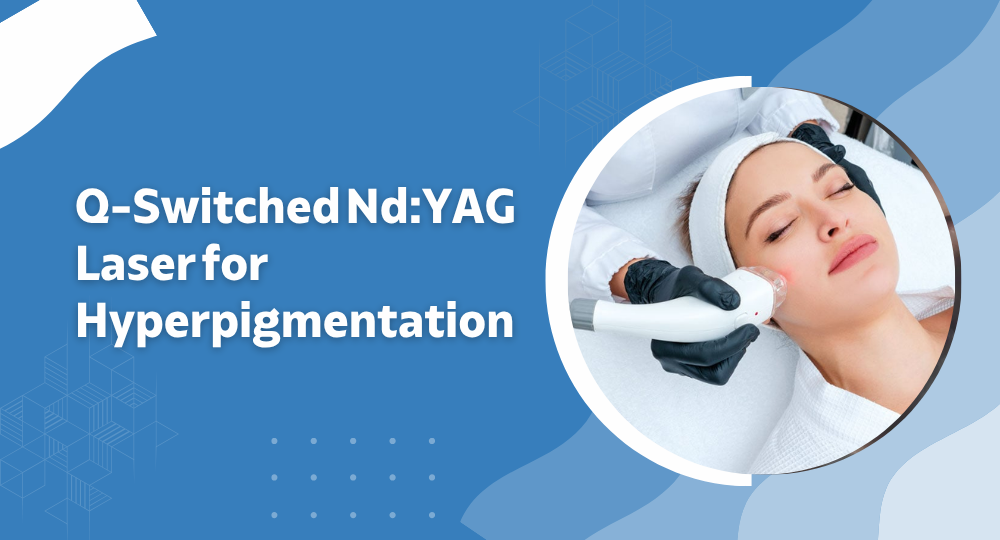
Q-Switched Nd:YAG laser breaks down deep and superficial pigmentation through ultra-short nanosecond pulses. The 1064nm and 532nm wavelengths target melanin without damaging surrounding skin. Most Indian patients see 60 to 80 percent pigment reduction across 4 to 6 sessions spaced 3 to 4 weeks apart.
According to Dr. Archit Aggarwal a experienced Dermatologist in Faridabad , “Q-Switched Nd: YAG works on Indian skin where other lasers backfire. The wavelength penetrates deep without burning, which matters for Fitzpatrick IV to VI tones where wrong settings trigger more pigmentation instead of less.”
Types of Hyperpigmentation That Can Be Treated With Q-Switched Nd:YAG Laser
Not every dark patch responds the same way to laser. Q-Switched Nd:YAG works best on certain pigment types, especially those with deep melanin deposits that creams and serums cannot reach.
Conditions treated with Q-Switched Nd:YAG laser:
- Melasma: Hormonal pigmentation across cheeks, forehead, and upper lip, common in Indian women aged 25 to 50.
- Post-inflammatory hyperpigmentation (PIH): Dark marks left behind by acne, eczema, or skin injury.
- Solar lentigines: Sun-induced dark spots on cheeks, forehead, and hands.
- Freckles (ephelides): Small light-brown spots that darken with sun exposure.
- Nevus of Ota: Bluish-grey pigmentation around the eyes, temple, and forehead area.
- Hori’s nevus: Acquired bilateral pigmentation common in Asian women aged 30 to 50.
- Age spots: Localised pigmentation linked to ageing and cumulative UV damage.
- Tattoo pigment: Black, blue, and dark ink pigments break down across multiple sessions.
Each pigment type needs different wavelength settings, pulse energy, and session spacing. A skilled dermatologist customises laser parameters based on pigment depth, colour intensity, and individual skin tone.
How Q-Switched Nd:YAG Laser Targets Pigmentation
The laser uses a principle called selective photothermolysis. Ultra-short pulses deliver concentrated energy directly into pigment particles without heating surrounding tissue.
How the laser breaks down pigment:
- Two wavelengths: 1064nm targets deep dermal pigment, 532nm treats surface pigmentation.
- Nanosecond pulse duration: Energy hits and exits before heat damages tissue.
- Selective absorption: Melanin absorbs the energy, healthy skin reflects it.
- Pigment fragmentation: Pulse shatters melanin clusters into microscopic particles.
- Natural clearance: Body removes broken pigment through lymphatic drainage over weeks.
Why it works safely on Indian skin:
- Deep wavelength penetration: Bypasses the melanin-rich surface layer common in Indian skin.
- Low burning risk: Reduced thermal impact prevents post-inflammatory pigmentation.
- Safe for Fitzpatrick IV to VI: Tested across darker skin tones with strong safety data.
- Adjustable energy levels: Settings calibrated to individual pigment depth and density.
Want to know if your pigmentation is treatable with Q-Switched Nd:YAG laser? Book a skin assessment for a personalised treatment plan
What to Expect During and After the Procedure
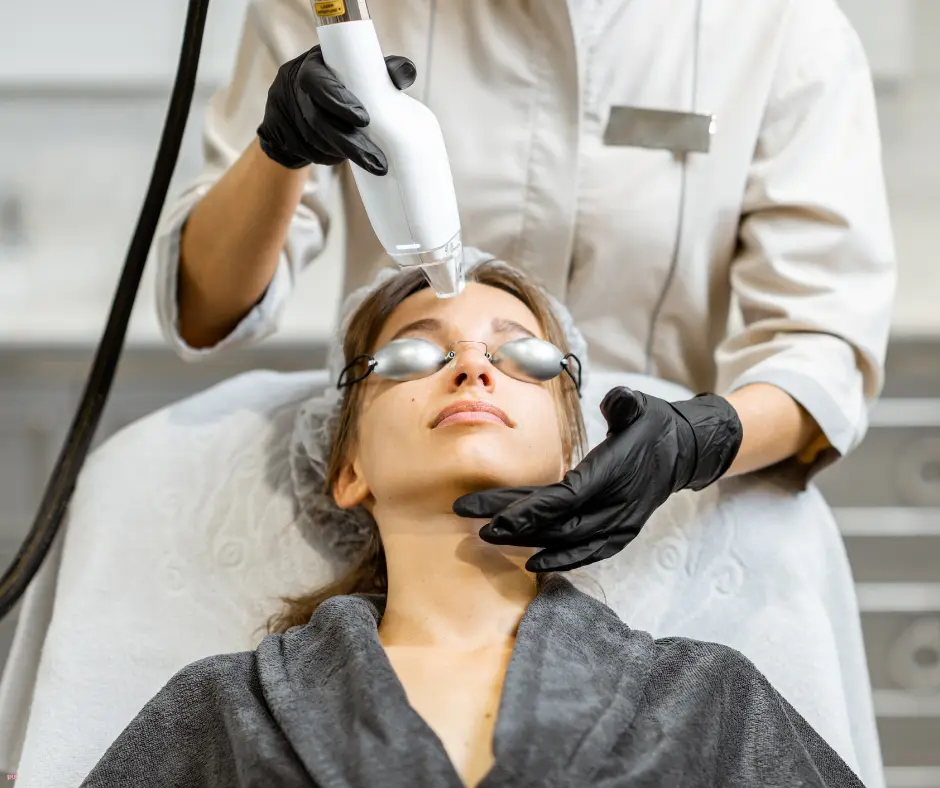
A typical session takes 15 to 30 minutes depending on the treatment area, performed using an advanced laser system calibrated to individual skin tone and pigment depth. Most patients return to work the same day with only minor visible redness. .
During the procedure:
- Pre-treatment cleanse: Skin is cleansed and numbing cream applied for 20 to 30 minutes.
- Eye protection: Patient wears safety goggles throughout the session.
- Laser passes: Dermatologist makes 2 to 3 passes across the pigmented area.
- Sensation: Mild snapping or rubber-band feeling on the skin surface.
- Cooling: Cold air or ice pack applied between passes to reduce discomfort.
After the procedure:
- Day 1: Mild redness, slight swelling, and frosting (white discolouration) on treated spots.
- Day 2 to 5: Tiny scabs may form. Pigmentation can look darker before clearing.
- Week 1 to 2: Scabs fall off naturally, treated skin starts to lighten gradually.
- Week 3 to 4: Visible pigment reduction, fading continues over the next month.
- Next session: Booked 3 to 4 weeks after the first based on healing pace.
Aftercare rules for best results:
- Sunscreen SPF 50+: Reapply every 3 hours during daylight, even indoors.
- No scrubbing or exfoliating: Wait at least 7 days before any active skincare.
- Avoid hot showers: Lukewarm water only for the first 48 hours.
- No makeup for 24 hours: Skip foundation and concealers until skin settles.
- Gentle moisturiser: Use a fragrance-free formula twice daily to support healing.
When to Consult a Dermatologist for Hyperpigmentation
Most pigmentation issues respond better when treated early. Waiting lets melanin deposit deeper into the skin, making removal slower, more expensive, and harder to maintain.
Signs you should book a consultation:
- Dark patches spreading or darkening: Especially across cheeks, forehead, or upper lip.
- OTC creams not working: Hydroquinone, kojic acid, or retinols failing after 3 months.
- Hormonal triggers: Pigmentation worsening during pregnancy, contraceptives, or thyroid issues.
- PIH after acne: Brown marks lingering for months after pimples heal.
- Sun-induced spots multiplying: New spots appearing across face, arms, or hands.
- Pigmentation affecting confidence: Visible patches impacting daily life or self-image.
Dr. Archit Aggarwal conducts a detailed skin analysis before any laser session, including pigment depth scanning, skin type assessment, and trigger evaluation. Early intervention combined with custom laser settings delivers the best long-term results across Indian skin tones, with maintenance sessions scheduled every 6 to 12 months to prevent recurrence.
Ready to start your pigmentation treatment journey? Consult a dermatologist for a custom Q-Switched Nd:YAG laser plan based on your skin type and pigmentation depth.
Frequently Asked Questions
Is Q-Switched Nd:YAG laser safe for Indian skin?
Yes. The 1064nm wavelength is specifically safe for Fitzpatrick IV to VI skin tones.
How many sessions are needed for visible results?
Most patients need 4 to 6 sessions spaced 3 to 4 weeks apart.
Does Q-Switched Nd:YAG laser hurt during treatment?
Mild snapping sensation only. Numbing cream applied before treatment reduces discomfort.
Can pigmentation come back after Q-Switched Nd:YAG laser?
Yes, especially melasma. Daily sunscreen and maintenance sessions prevent recurrence.
How soon will I see results after the first session?
Visible lightening usually starts within 2 to 3 weeks of the first session.
