

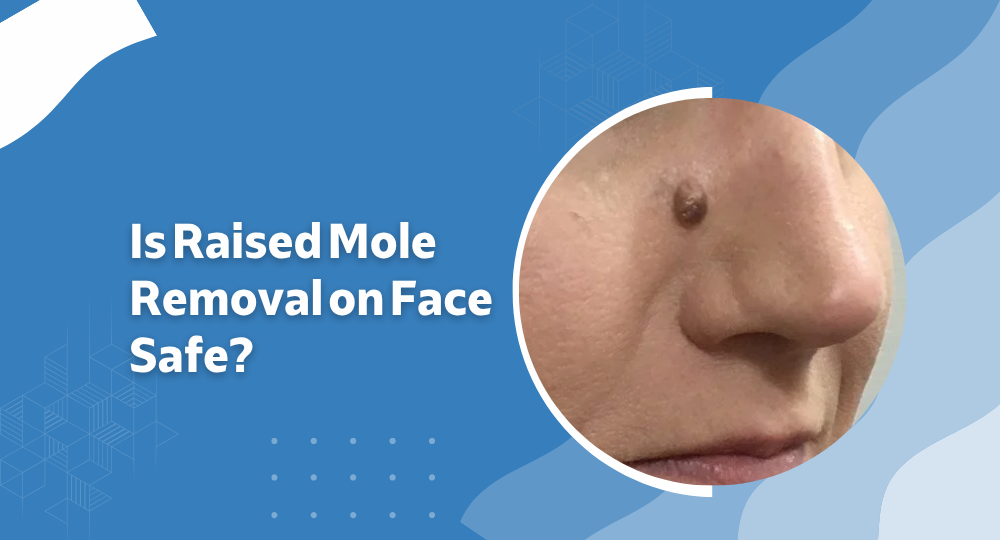
Yes, removing a raised mole on the face is safe when done by a qualified dermatologist. The procedure is quick, performed under local anaesthesia, and takes under thirty minutes. Risks like infection, scarring, or missed skin cancer only show up with home remedies, beauty parlour attempts, or untrained providers. A dermatologist also examines the mole first to rule out anything dangerous.
According to Dr. Archit Aggarwal, mole removal treatment in Faridabad, “Most facial moles are harmless. The real risk isn’t removal. It’s removing one at home without knowing if it’s cancerous.”
When Is It Actually Safe to Remove a Facial Mole?
Not every mole needs to come off. A proper evaluation decides what’s safe and what isn’t.
- Benign: Stable, evenly coloured moles that don’t itch, bleed, or change can be safely removed.
- Cosmetic: Raised moles on the nose, cheek, lip, or chin are commonly removed for appearance.
- Irritating: Moles snagging on jewellery, razors, or glasses qualify for removal anytime.
- Suspicious: Asymmetric, multi-coloured, or rapidly changing moles need biopsy, not laser zapping.
Dermatologists examine the mole with a dermatoscope before touching it. If it looks abnormal, it gets excised and sent for biopsy. If it’s harmless, you choose between shave excision, surgical excision, or radiofrequency. That’s why proper mole removal treatment at KDC Clinic always starts with a clinical exam, not a quick zap.
Worried about a mole that’s changing? Book Appointment
How Do Dermatologists Remove Facial Moles Safely?
The method depends on the mole’s size, depth, and location. Each technique has a clear use.
- Shave: A sterile blade levels the mole flush with the skin, no stitches needed.
- Excision: Deeper moles get cut out fully and closed with fine sutures for cleaner healing.
- Radiofrequency: A precision device removes small raised moles with minimal scarring.
- Biopsy: Any suspicious mole is sent to histopathology before final cosmetic correction.
And the scar question? Honest answer, every removal leaves some mark. The art is in keeping it invisible. Lifting weights, picking the scab, or skipping sunscreen makes it worse. If you’re researching post-procedure skin care, this guide on Dark Spots After a Chemical Peel covers how pigmentation can darken any healing scar if you’re not careful.
Why Choose Dr. Archit Aggarwal for Mole Removal Treatment?
Dr. Archit Aggarwal is an MD Dermatologist from RGUHS Bangalore with 13+ years performing minor skin surgeries on Indian skin. Every facial mole at KDC is examined with a dermatoscope first, biopsied if suspicious, and removed using the technique that leaves the least scarring. No shortcuts, no cautery burns, no parlour-style butchery.
KDC Skin & Hair Clinic handles hundreds of mole removal cases each year with strict sterile protocols and visible results.
Frequently Asked Questions
Is mole removal painful?
No, local anaesthesia is used so the procedure is virtually painless throughout.
Will mole removal leave a scar?
A small mark is possible, but skilled removal keeps it nearly invisible.
Can a removed mole grow back?
Sometimes, especially after shave excision of deeper moles. Re-removal is straightforward.
How long does facial mole healing take?
Most facial wounds heal within seven to fourteen days with proper aftercare.
