

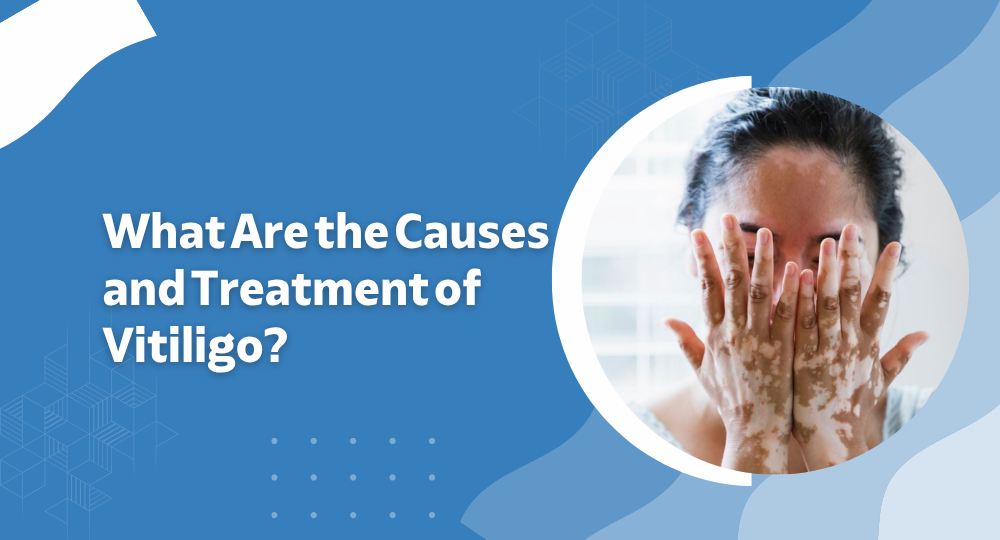
Vitiligo is when your own immune cells turn on the melanocytes in your skin. These are the cells that make pigment. Once they’re gone, you get smooth white patches, mostly on hands, lips, around the eyes. It doesn’t spread by touch. Doesn’t hurt either. Cause? Bit of a mix. Some of it runs in families, some of it kicks in after a stressful patch, a bad sunburn, or even a chemical reaction from cheap hair dye. As for treatment, depends entirely on whether the patches are still moving or sitting quiet. Creams help in the early stage. Light therapy does the heavy lifting for many. And in stable cases, surgery actually works.
According to Dr. Archit Aggarwal, vitiligo treatment in Faridabad, “Vitiligo’s not dangerous. But the longer people wait, the harder it is to bring back pigment. Six months matters.”
What Are the Real Causes and Symptoms of Vitiligo?
Vitiligo doesn’t have a single villain behind it. Most patients want one clear reason, but the truth is messier. It’s autoimmune at its core, but rarely just that. A few things push it along.
- Autoimmune: Your own immune system mistakes melanocytes for enemy cells and wipes them out.
- Genetics: About one in three patients has a relative with vitiligo or thyroid problems.
- Triggers: Sunburn, stress, deep cuts, hair dyes with phenol, all can start new patches.
- Symptoms: Tiny pale dots near lips, fingertips, eye corners that widen quietly over time.
Honestly, the first patch usually gets ignored. Looks like dry skin. Maybe a fungal patch. People scrub it, moisturise it, hope it fades. Then suddenly it’s bigger and another one shows up beside it. A Wood’s lamp exam clears the doubt fast, and thyroid blood work usually comes next. None of this skipped in proper vitiligo treatment at KDC Clinic. Diagnosis first. Then everything else.
Found a new pale spot anywhere? Book Appointment
How Is Vitiligo Treated and Can It Be Prevented?
Treating vitiligo isn’t a one-cream prescription job. It depends on whether the patches are spreading right now or sitting quiet. There’s no single magic answer here. What works changes with how active the disease is.
- Topicals: Steroid creams, tacrolimus, the newer JAK options for early patches.
- Phototherapy: NB-UVB twice a week, best results on face, neck, body trunk.
- Surgery: Punch grafting or melanocyte transplant when patches have stayed still for a year.
- Lifestyle: Sun protection, thyroid monitoring, stress control. None of it optional.
Prevention is tricky. You can’t really prevent vitiligo because the trigger is inside your own immune system. What you can do is catch it early and stop new patches by avoiding skin trauma. A bad burn, a cut, even tight rubbing from a watch strap, all of these can push new spots in someone already vulnerable. If your white spots came after a scaling rash, this guide on Skin Rash with White Spots explains how to separate vitiligo from the conditions that fake it.
Why Choose Dr. Archit Aggarwal for Vitiligo Treatment?
Dr. Archit Aggarwal is an MD Dermatologist from RGUHS Bangalore, 13+ years deep into pigment disorders on Indian skin. Vitiligo plans at KDC start by stopping the spread first. Repigmentation comes later, and the method depends on what’s actually working for that patient. Not the next one.
KDC Skin & Hair Clinic sees vitiligo at every stage. Tiny lip patch, widespread body involvement, grafting candidates. For an honest consult, call +91 86868 63140.
FREQUENTLY ASKED QUESTIONS
Is vitiligo contagious?
No, vitiligo is autoimmune and cannot spread by touch, sharing, or contact.
Can vitiligo be cured permanently?
There’s no permanent cure, but treatment can stop spread and restore pigment significantly.
Does vitiligo spread fast?
Spread varies. Some cases stay stable for years, others spread within months.
Which food is bad for vitiligo?
Avoid sour citrus, fish with milk, and excess processed foods according to most dermatologists.
