
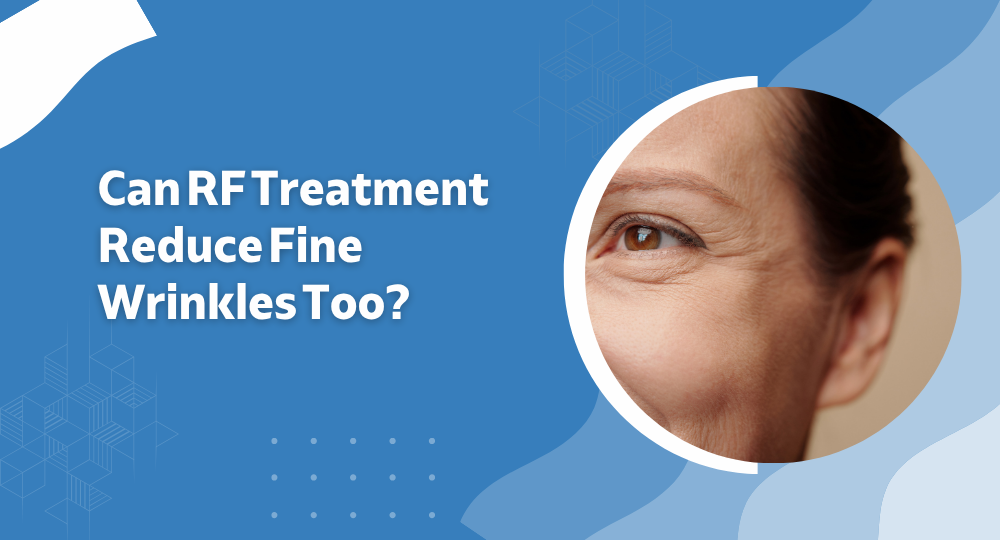
Fine wrinkles tend to show up first around the eyes, usually noticed under harsh bathroom lighting. Radiofrequency can soften those early lines, and clinical studies on facial rejuvenation report visible improvement. It works by warming the deeper skin so it starts producing firmer tissue on its own. Light creases soften. Deep folds mostly don’t budge, and nothing changes overnight. So before anyone books an anti wrinkle treatment, it helps to know which kind of line they actually have.
According to Dr. Archit Aggarwal, a skin specialist in Faridabad, “Radiofrequency does well with early, shallow lines, especially around the eyes and forehead. It won’t erase deep folds. Going in with that clear is what keeps expectations realistic.”
What Does Radiofrequency Do to Fine Wrinkles?
RF treatment for wrinkles is basically controlled heating, just placed beneath the surface instead of on it.
Deep heating: The dermis does the heavy lifting here. Energy passes through the outer layer and warms it directly, so there’s no cutting and no peeling.
Repair response: That controlled warmth reads as mild stress, so the skin starts rebuilding its collagen network. Firmer tissue lifts shallow creases from below.
Slow build: Some tightening shows within days. The fuller change takes three to six months. That’s why photos taken a week in don’t say much.
Limits on depth: Fine lines and crepey texture usually respond well. Deeper creases, the kind etched in over years of expression, rarely shift with heat alone.
In a clinic, radiofrequency treatment is adjusted area by area, since skin around the eyes usually needs a gentler setting than the cheeks or jawline.
Shallow line or deep wrinkle? Depth decides almost everything that follows.
HIFU or RF: Which One Suits Wrinkles?
RF warms the skin with radio waves, while HIFU (high intensity focused ultrasound) delivers focused sound to deeper tissue, and neither involves surgery.
|
Feature |
RF |
HIFU |
|
Energy used |
Radiofrequency waves |
Focused ultrasound |
|
Depth reached |
Upper and mid dermis |
Deeper layers, including tissue below the dermis |
|
Better suited for |
Shallow lines, mild laxity, texture |
Jawline lift, moderate sagging |
|
Sensation |
Warmth and some pressure |
Short, sharp stings |
|
Results timeline |
Gradual, usually three to six months |
Often noticeable by two to three months |
Shallow wrinkles suit RF: Lines near the eyes and forehead are usually shallow, and RF handles them well because it heats a wide area evenly.
Lifting favours ultrasound: A jawline that’s starting to soften, or early jowls, needs energy that goes deeper. That’s the layer focused ultrasound is aimed at.
Trial findings: One prospective trial reported wrinkle and laxity improvement with both methods. The results weren’t identical, and ultrasound showed up a little sooner.
Mixed plans: When texture and sagging show up together, some people use both. RF for the surface quality, ultrasound for the lift.
To see how RF handles looseness rather than lines, this post on skin tightening results covers who responds best.
How Safe and How Lasting Is RF Skin Tightening?
Most worries come down to two questions: can it go wrong, and does it last? Both have fairly clear answers.
Usual side effects: A little redness and puffiness is common for a few hours. Most people are back to their normal routine by evening.
Rare problems: Burns, blisters and patchy heating are possible, usually when settings run too high or the practitioner lacks experience. Some “ruined my face” stories likely trace back to that, or to heavy heating on a very thin face where volume loss becomes visible.
Home devices: At home RF tools deliver far less energy, so they may soften texture slightly but won’t match clinic grade results. Regular use makes more difference than the power setting.
Lasting power: Not permanent. Collagen loss doesn’t stop after treatment, so results tend to hold for roughly one to two years. Maintenance sessions can stretch that.
If lines sit alongside scarring or rough texture, microneedling radiofrequency is sometimes brought in. The acne scar post explains how needle channels and heat work together.
Key Takeaways
RF treatment for wrinkles suits people with early lines and mild looseness. Improvement builds over three to six months, and safety depends on the settings and on who is chosen for treatment. It isn’t permanent, it stops short of deep folds, and home devices are milder versions. For an anti wrinkle treatment, picking the right method matters more than picking the right device.
Frequently Asked Questions
Is RF skin tightening permanent, or does it fade?
No. Results usually hold one to two years, longer with top ups.
Will a keloid shrink on its own without treatment?
Rarely. Most keloids need active treatment to flatten or shrink.
Do at home RF devices work as well as clinic sessions?
No. Home devices use lower energy and give milder, briefer results.
Can RF burn or damage the face?
Mild redness fades fast. Burns are rare and usually come from wrong settings.
References:
Disclaimer: This blog is for educational purposes only and is not a substitute for professional medical advice.